Academic bedside robots · cathrob_cercenelli2017
CathROB
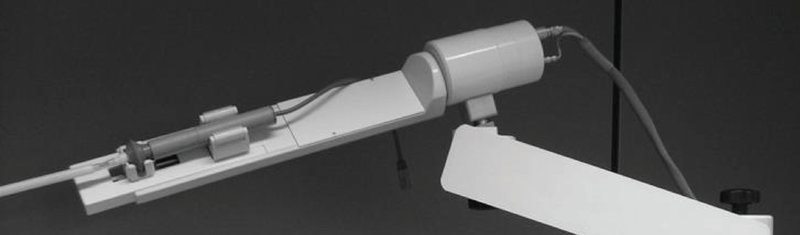
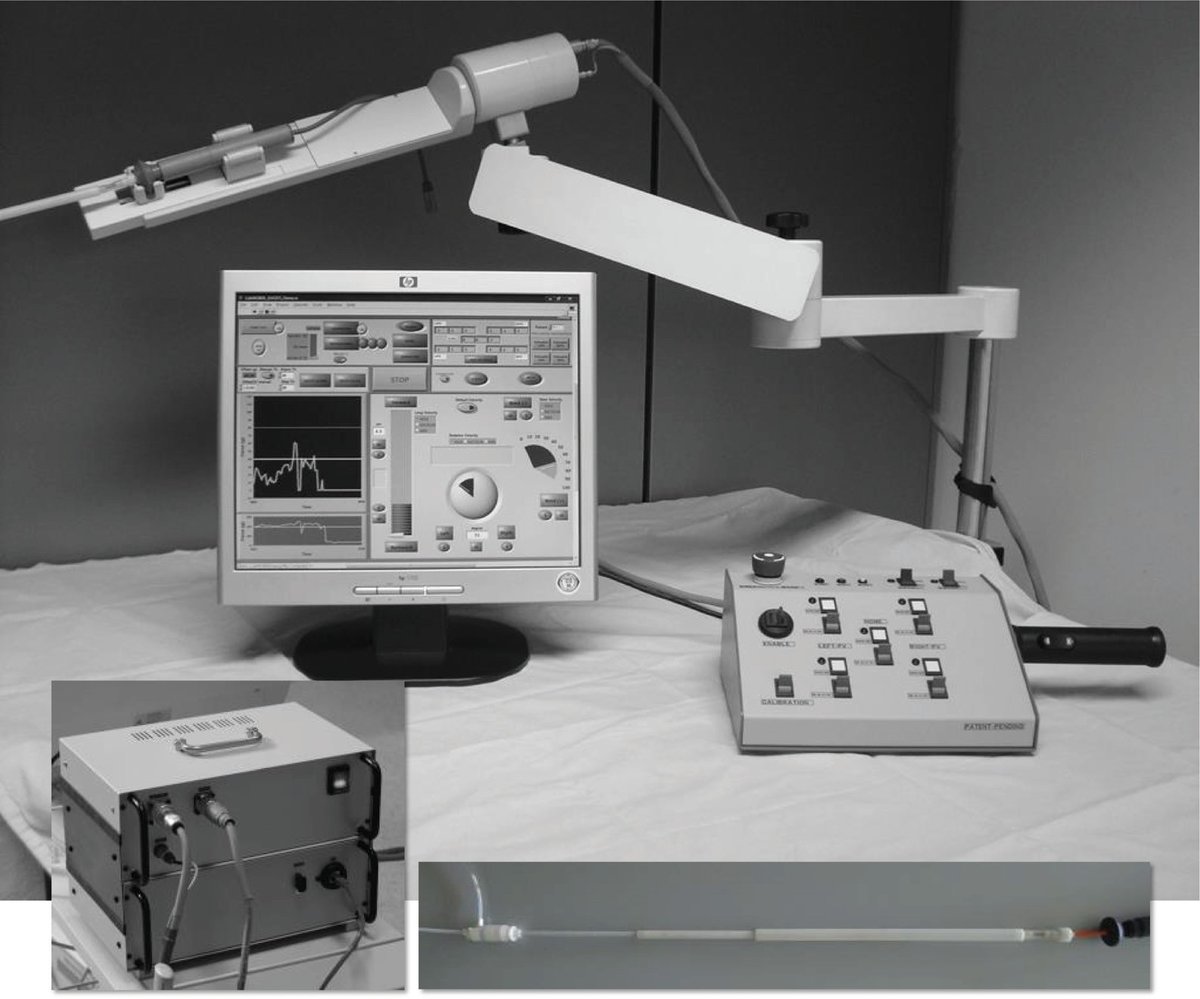
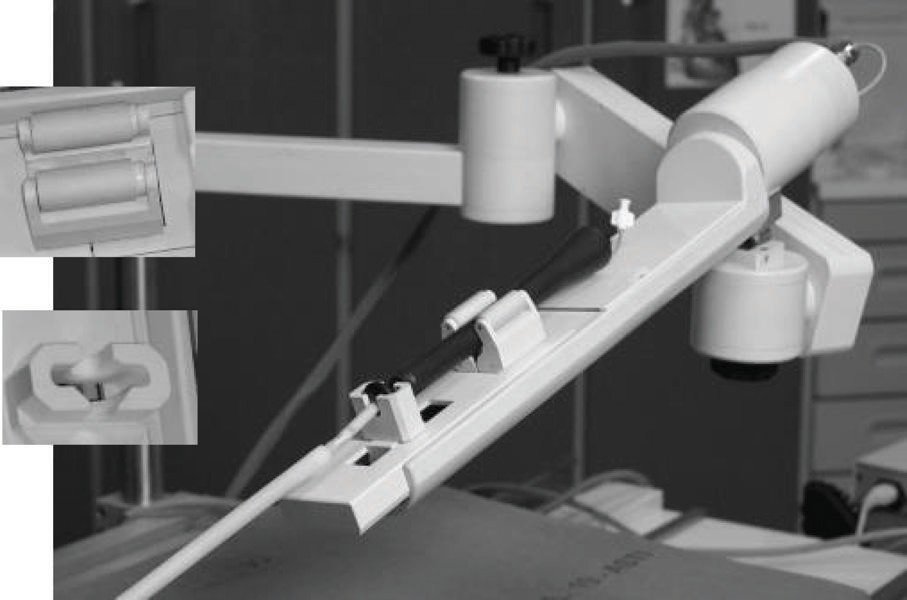
CathROB remote catheter navigation system (with its 2007-2008 telerobotic predecessor)
 1 / 9
- Family
- Academic bedside robots (academic)
- Devices
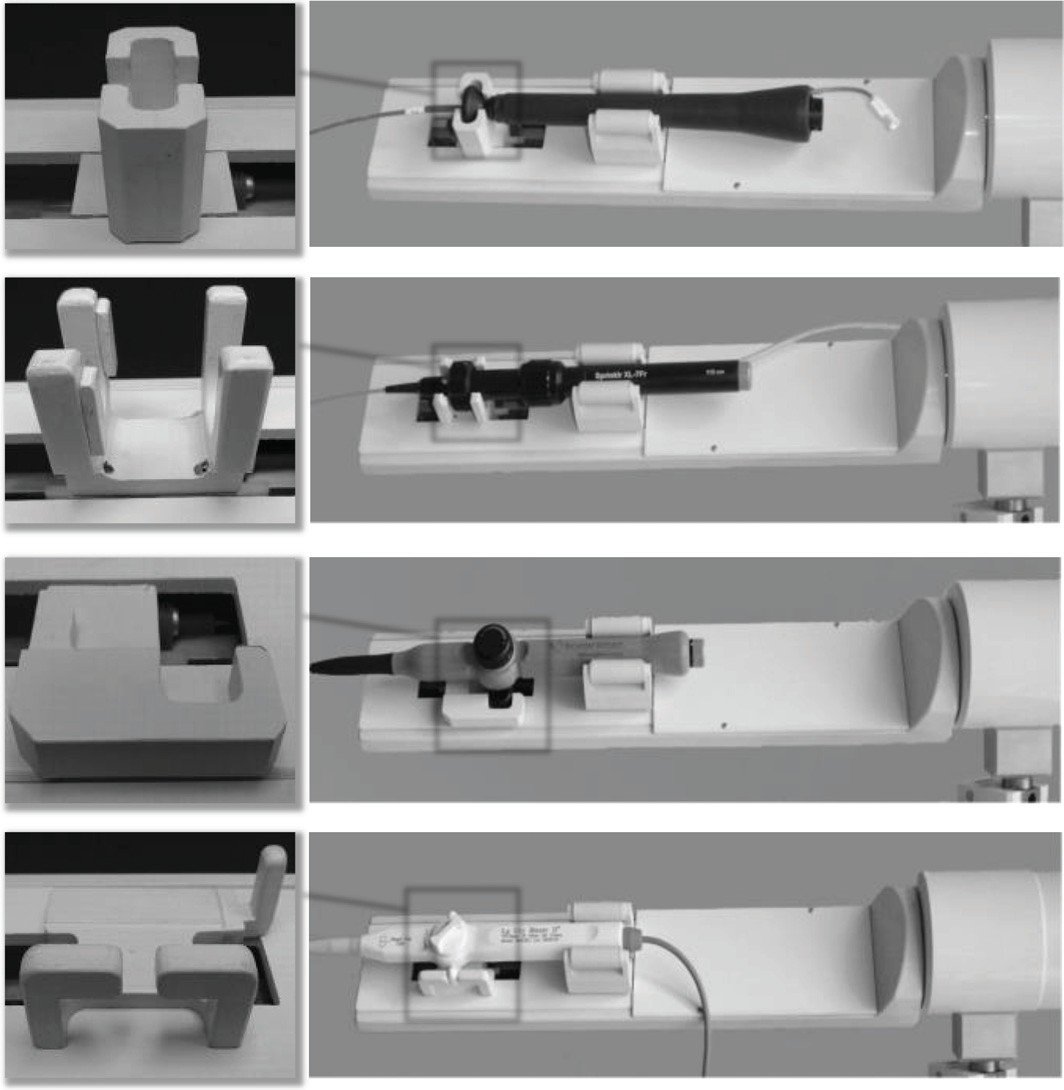
- one standard tip-steerable EP catheter; adapters for Navistar Thermocool and EZ-steer bidirectional (Biosense Webster), Sprinklr XL 7 Fr (Medtronic), Blazer II XP (Boston Scientific); tested with Navistar Thermocool 4 mm 7.5 Fr (Sec. 2.1); 2007: RF Enhancr steerable EP catheter (Medtronic) (cercenelli2007 Methods)
- Degrees of freedom
- 3 (advance/withdraw, rotation, tip bend/straighten)
- Push
- Linear stage
- Twist
- Handle or knob
- Tested up to
- Animal
- Sim-to-real
- None found — No simulation-trained controller found for this robot.
Testing
- Highest level
- Animal
- What was tested
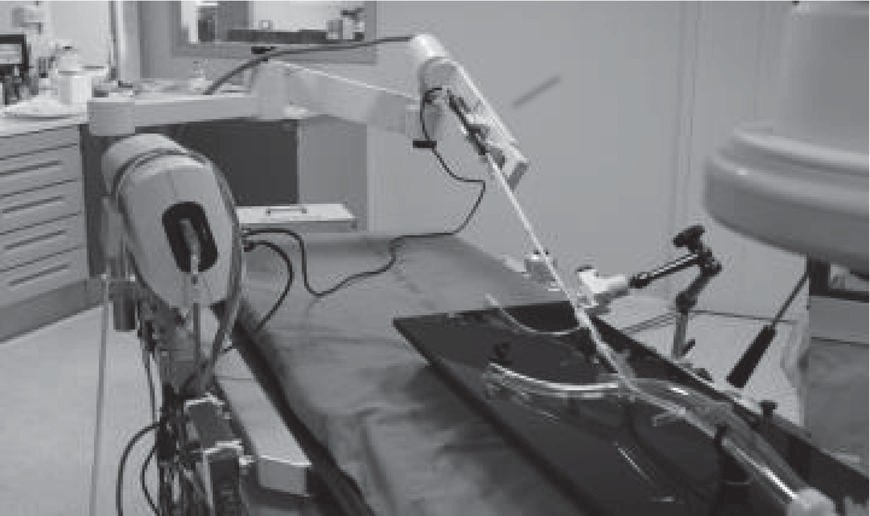
- in vitro silicone heart and vascular mock-up; in vivo 4 sheep (49 +- 4 kg) with right-atrial CARTO mapping and RF ablation at RA isthmus and posterior wall (Sec. 2.2, 3); 2007 predecessor: 3 sheep (58 +- 3 kg), navigation and repositioning to 12 predefined endocardial targets under fluoroscopy, manual vs robotic (cercenelli2007 Methods, Results)
- Key numbers
- automatic repositioning error 1.5 +- 0.6 mm (left targets) and 1.7 +- 0.5 mm (right; abstract 1.7 +- 0.4); map-to-CT deviation 1.37 +- 0.98 mm; in vivo set-up 5 +- 3 min, maps 63 +- 8 points in 36 +- 7 min with 15 +- 3 min fluoroscopy; speeds 13-18 mm/s, 30-45 deg/s, 2-4 mm/s; no perforation or rhythm change (Sec. 2.1, 3); 2007: navigation 13.0 +- 5.6 s robotic vs 16.1 +- 6.4 s manual, repositioning 9.2 +- 2.5 vs 17.8 +- 7.1 s (both p < 0.001); bench repositioning accuracy 0.2 +- 0.1 mm, 1.4 +- 0.8 mm, 2.1 +- 0.9 mm (longitudinal, rotational, steering) (cercenelli2007 Abstract, Methods)
Mechanism
- Push (translation)
- linear-stage+clamp (Motion Unit moves the handle held by a spring-preloaded jaw block with silicone-coated rollers; Delrin telescopic sheath to the introducer)
- Twist (rotation)
- DC micromotor rotates the gripped handle; steering element turned through catheter-specific adapters
- Device range
- four commercial EP catheter models via adapters
- Target anatomy
- cardiac electrophysiology mapping and RF ablation (right atrium in sheep; silicone left-atrium model)
Sensing and interface
- Force sensing
- Honeywell FS-series piezoresistive sensor in the push path; alarm at 60% and stop at 80% of a perforation force of 128 +- 12 gF measured on excised ovine atrium (Sec. 2.1)
- Leader and haptics
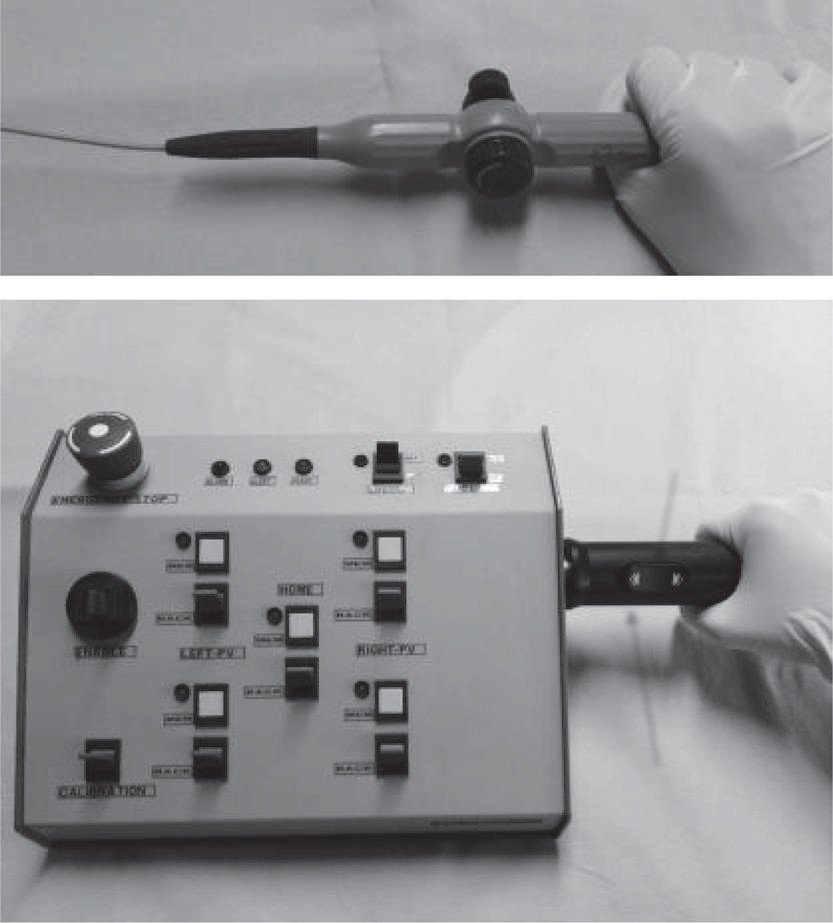
- mock catheter handle plus push-button box; vibration motor and acoustic alarm when thresholds are exceeded; up to four stored targets for automatic repositioning
- Imaging
- standard fluoroscopy and CARTO electroanatomic mapping; operator outside the radiation field
- Sterility
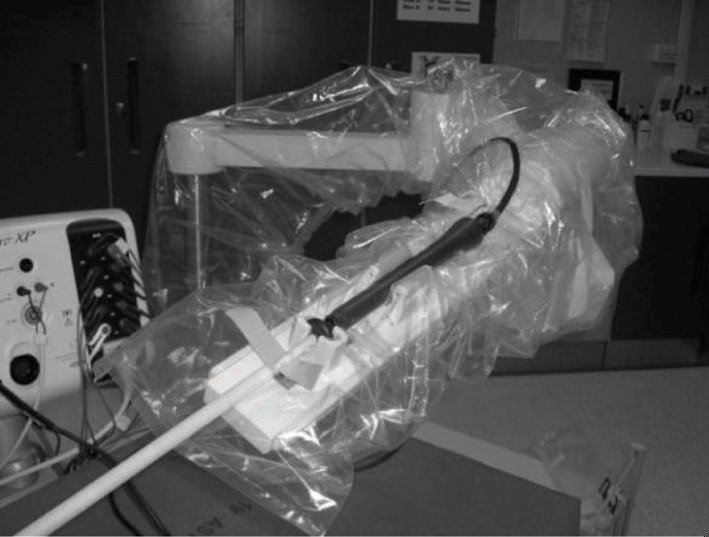
- disposable or sterilisable adapters; Motion Unit and arm draped in sterile polyethylene in vivo
Size
- Footprint (mm)
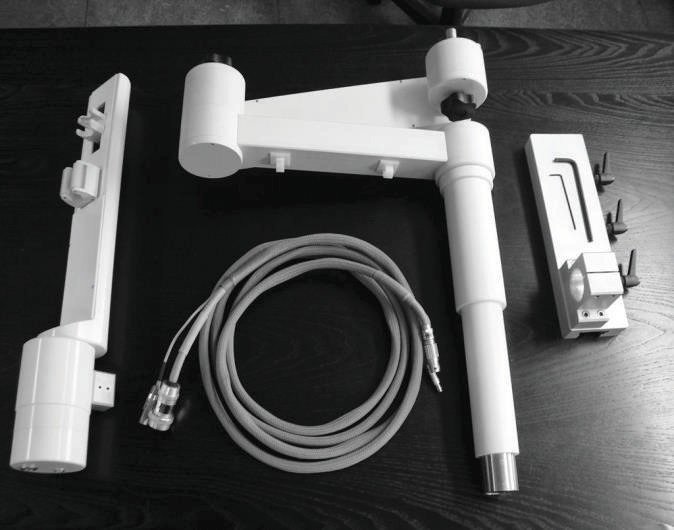
- Motion Unit 53 x 8 x 11 cm (Fig. 4 labels; text prints 53 x 8 x 110 cm) retracted, 73 x 8 x 11 cm extended (Sec. 2.1)
- Mass (kg)
- 2.3 (Motion Unit); supporting arm 7.5 (Sec. 2.1, Fig. 4)
Simulation
- Simulation model
- none found
- Sim-trained controller
- none found
Versions
- Lineage
- 2007 ASAIO J telerobotic system (cercenelli2007_initial, full): driving unit on an articulation arm giving advance/withdrawal, rotation and tip steering to a standard EP catheter, PIC16F876 control unit at the bedside, remote push-button box with display (wired or wireless), automatic repositioning to stored targets (Methods, Figs. 1-2); 2008 Computers in Cardiology telerobotic system with force sensing (title); 2017 CathROB: mock handle plus push-button box, compact arm-mounted Motion Unit (full)
Sources
- CathROB: A Highly Compact and Versatile Remote Catheter Navigation System · Applied Bionics and Biomechanics, 2017 · doi:10.1155/2017/2712453 [cercenelli2017_cathrob]
- Initial Experience With a Telerobotic System to Remotely Navigate and Automatically Reposition Standard Steerable EP Catheters · ASAIO Journal, 2007 · doi:10.1097/mat.0b013e3181484cd0 [cercenelli2007_initial]
- A novel telerobotic system to remotely navigate standard electrophysiology catheters · 2008 Computers in Cardiology, 2008 · doi:10.1109/cic.2008.4748996 [marcelli2008_novel]
Notes
- Notes
- Venue is Applied Bionics and Biomechanics (Hindawi, CC BY 4.0). Only CathROB is listed by li2024_design as an academic reference system next to commercial ones. | 2026-11-08 X3: 2007 paper read in full. Its two photographs (Fig. 2 driving unit on the articulation arm; Fig. 3 in vivo sheep set-up with the operator at the push-button box, 975 px greyscale) are not added because the gallery already holds 8 pictures; they are candidates if the coordinator swaps one
This record
- Read level
- full — full (CathROB 2017; 2007 ASAIO, ); title (2008)
- Picture
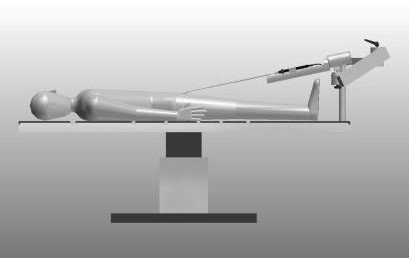
- cercenelli2017_cathrob Fig. 2(b) top (Motion Unit on articulated arm), native embedded image on PDF p. 3 from the PMC open-access PDF ↗ — licence: CC BY 4.0; grade B
- Picture changes
- native extract (1586 x 1320); cropped to Motion Unit and upper arm; no erasing (labels were vector overlays outside the bitmap); not upscaled (upscale disabled)
- Found by
- gap: Gap searches for robots the other searches missed.
- Data
- JSON · YAML:
records/robots/cathrob_cercenelli2017.yaml - Correction
- Suggest a correction [repository not created yet]