Academic bedside robots · saer_sankaran2018
SAER
SAER Surgeon Augmented Endovascular Robotic system
 1 / 7
- Family
- Academic bedside robots (academic)
- Devices
- conventional guidewire (same type on leader and follower)
- Degrees of freedom
- 2 (translation, rotation, uncoupled)
- Push
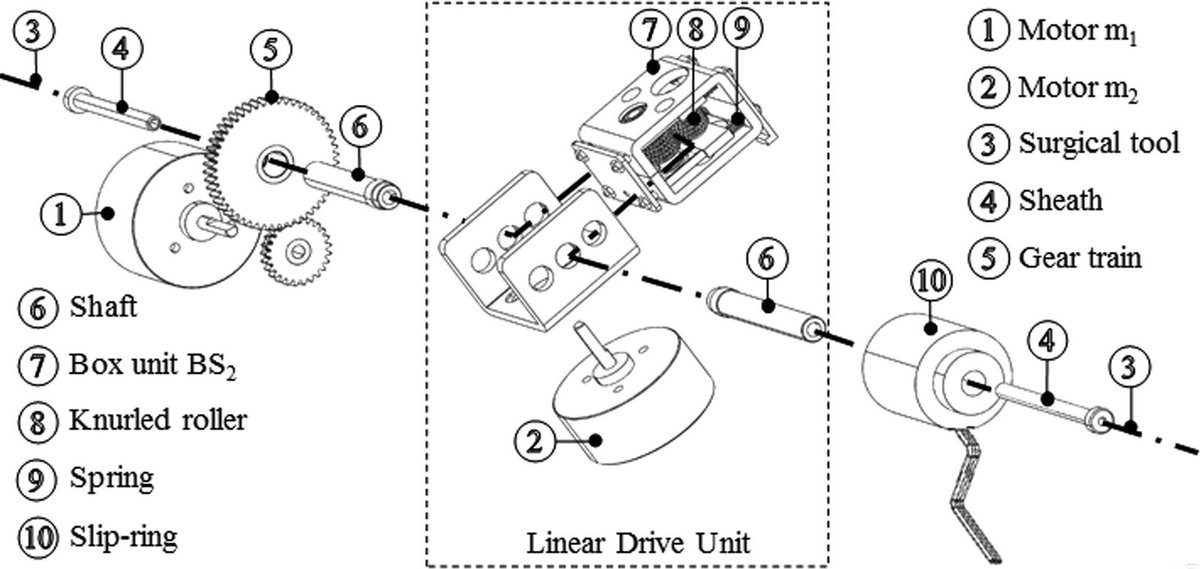
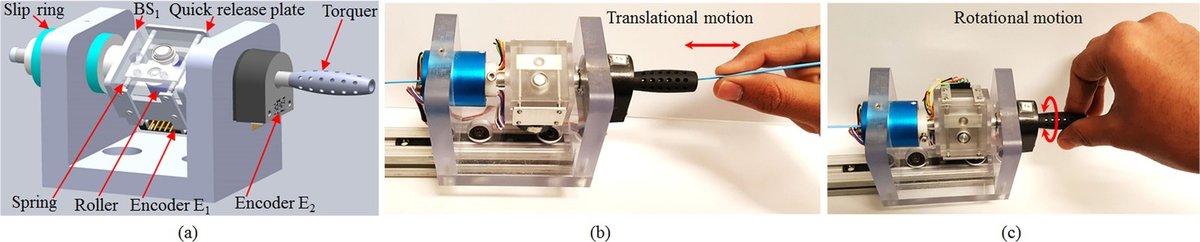
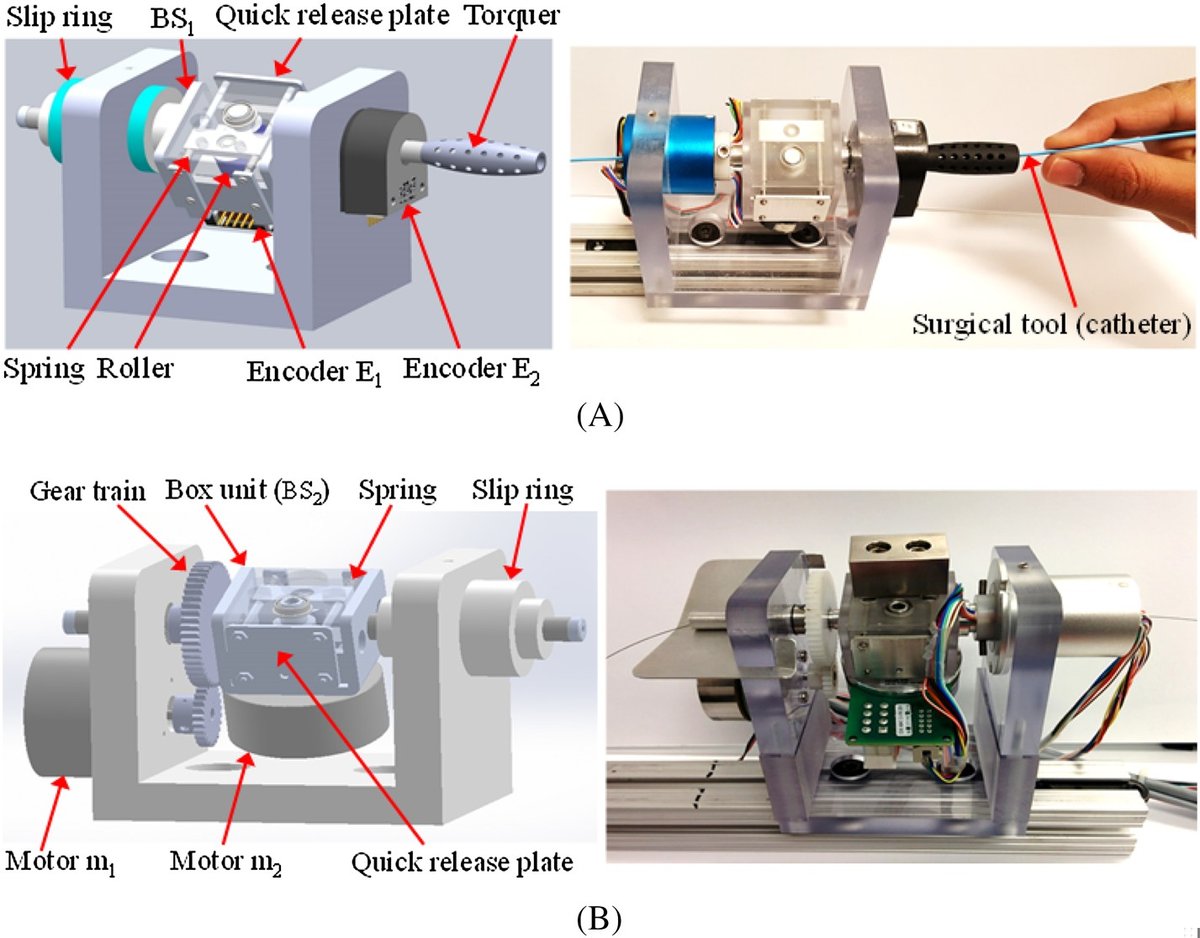
- Friction rollers
- Twist
- Rotating drive unit
- Tested up to
- Phantom
- Sim-to-real
- None found — No simulation-trained controller found for this robot.
Testing
- Highest level
- Phantom
- What was tested
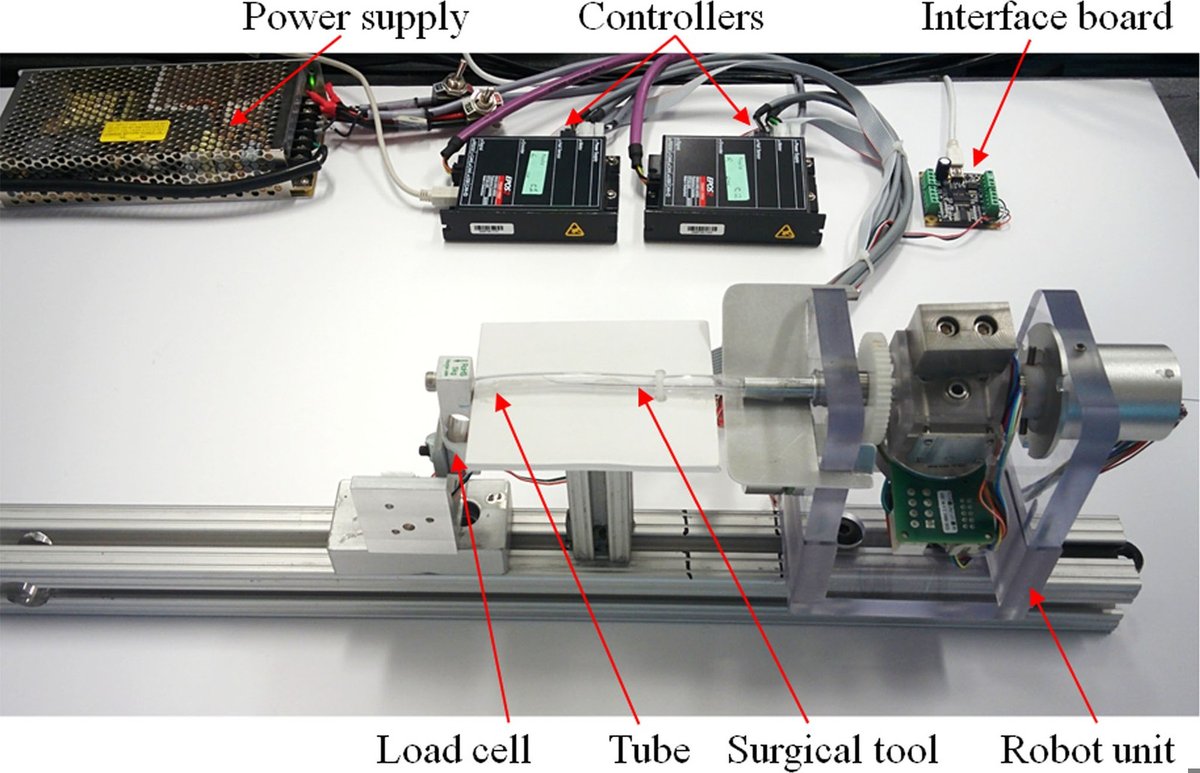
- simple and complex branching phantoms; count of runs N.R.; 2020: load-cell bench with a short phantom section and guidewire navigation in a simple branching phantom with a haptic alert at the block (sankaran2020 Figs. 2, 9)
- Key numbers
- stop/haptic threshold 1.5 N; force estimate validated at 30 and 50 rpm (curves, no error number); 2020: guidewire feed 15.7 mm/s at 30 rpm; bias force 0.6716 N at 30 rpm; unbiased estimate vs load cell RMS error 0.22 N (30 rpm) and 0.23 N (50 rpm) (sankaran2020 Results, Fig. 8)
Mechanism
- Push (translation)
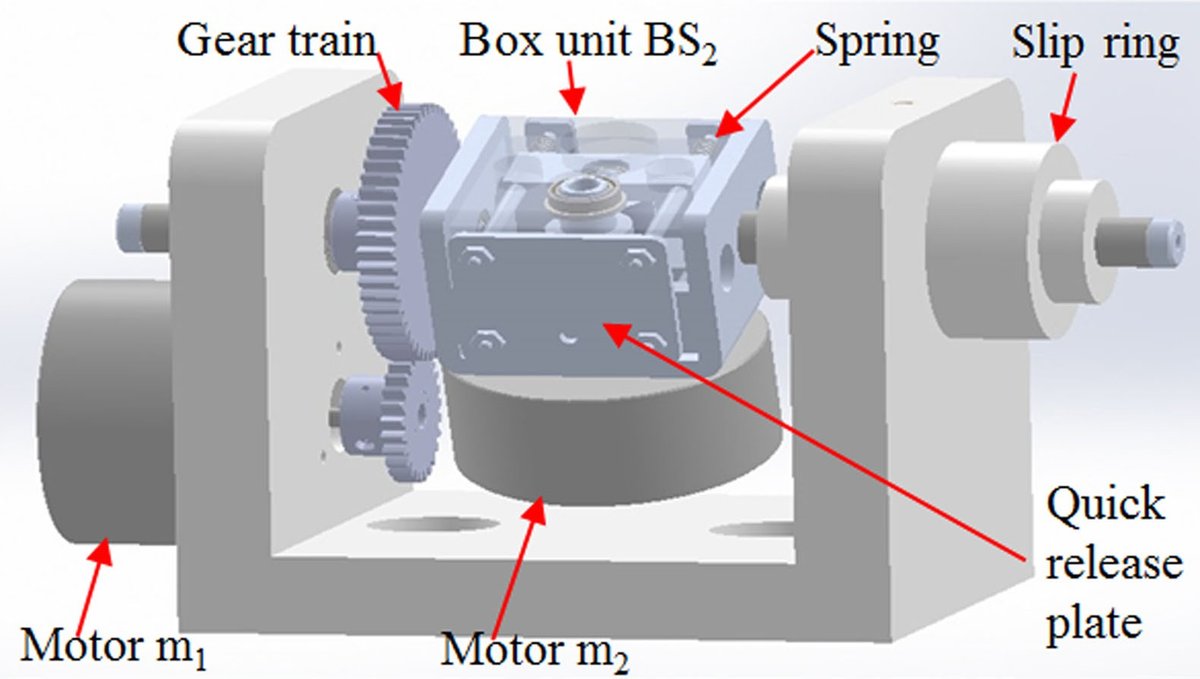
- friction-roller (knurled rollers)
- Twist (rotation)
- motor rotating the roller box about the tool axis (slip ring)
- Device range
- N.R.
- Target anatomy
- branching vascular phantoms (one mimics bovine aortic arch)
Sensing and interface
- Force sensing
- none; reaction force estimated from motor current, calibrated by bilevel optimisation, checked against a load cell
- Leader and haptics
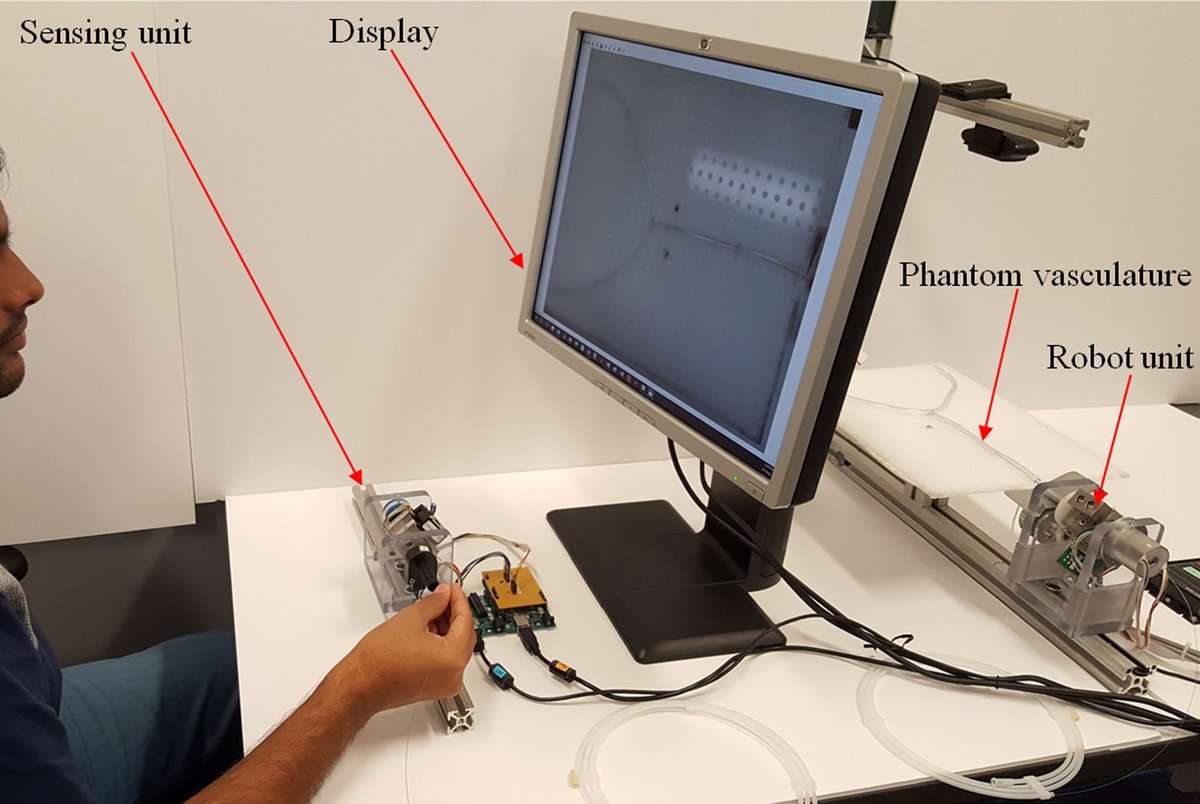
- sensing unit with encoder-read rollers on a real tool; vibratory/audio alert above 1.5 N (no force reflection)
- Imaging
- N.R.
- Sterility
- N.R.
Size
- Footprint (mm)
- N.R.
- Mass (kg)
- N.R.
Simulation
- Simulation model
- dynamic model of the drive only (no vessel simulator)
- Sim-trained controller
- none found
Versions
- Lineage
- 2018 TBME (sankaran2018_design); 2020 IJMRCAS force calibration of the same robot's current-based proximal force estimate by bilevel optimisation (sankaran2020_force, full)
Sources
- Design and Development of Surgeon Augmented Endovascular Robotic System · IEEE Transactions on Biomedical Engineering, 2018 · doi:10.1109/tbme.2018.2800639 [sankaran2018_design]
- Force calibration for an endovascular robotic system with proximal force measurement · The International Journal of Medical Robotics and Computer Assisted Surgery, 2020 · doi:10.1002/rcs.2045 [sankaran2020_force]
Notes
- Notes
- 2026-11-08 X3: ashammagari2016_image (IMECE 2016, same Kesavadas group) is NOT this robot: its autonomous aortic-arch run used a 7-DOF Robai Cyton arm feeding a guidewire into the VIST simulator, MDP policy, 30/30 trials, mean 31.23 s (Experiments and Results, Fig. 4)
This record
- Read level
- full — full (partial text) (sankaran2018_design); full (sankaran2020_force, )
- Picture
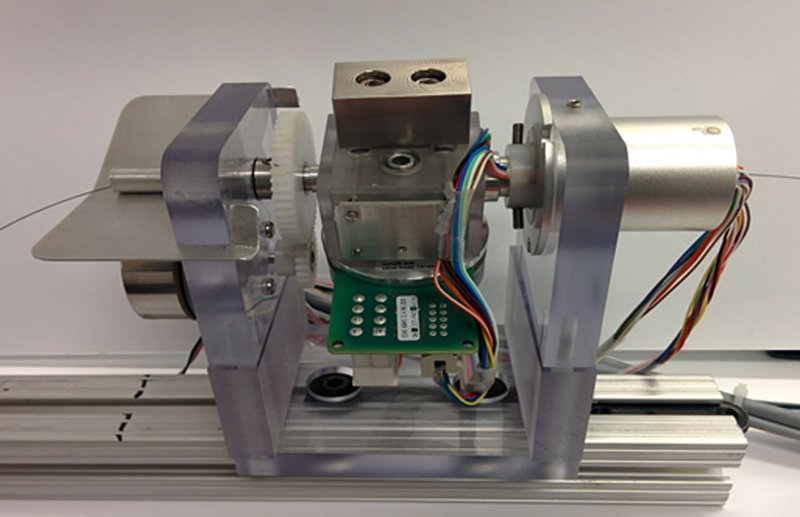
- sankaran2018_design Fig. 4, right panel (robot module photo; embedded 3000x895) ↗ — licence: publisher copyright (IEEE); grade A
- Picture changes
- native extract; cropped off the labelled CAD panel; not upscaled
- Found by
- academic: Search of academic bedside robots.
- Data
- JSON · YAML:
records/robots/saer_sankaran2018.yaml - Correction
- Suggest a correction [repository not created yet]