Academic bedside robots · leuven_alahmad2023
RACS
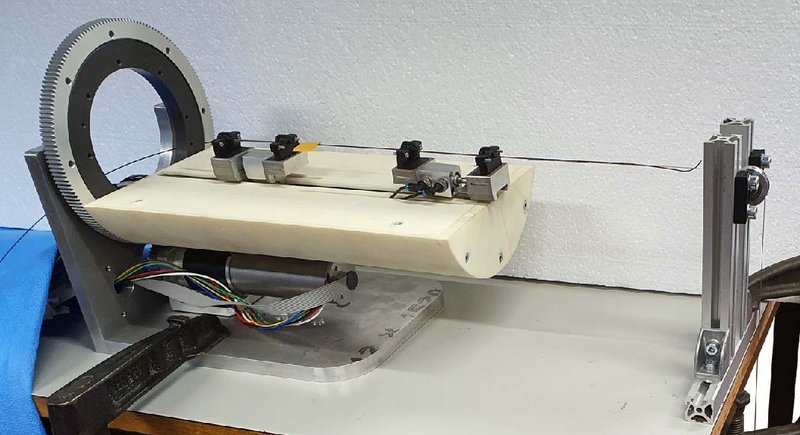
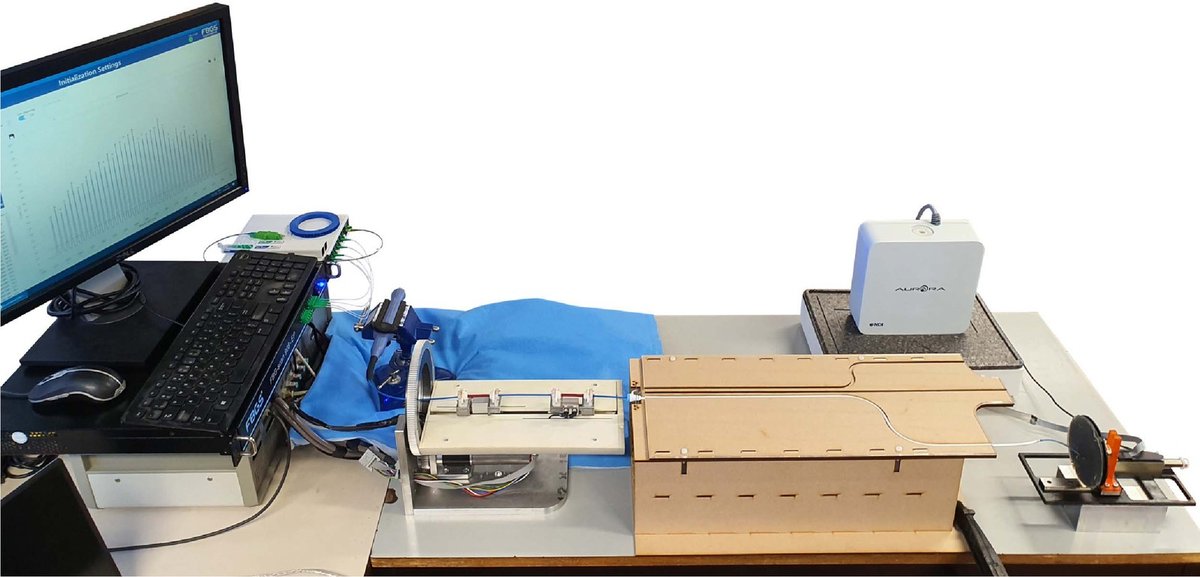
RACS braided-sleeve-gripper catheterisation system
 1 / 9
- Family
- Academic bedside robots (academic)
- Devices
- generic catheters and guidewires, one at a time (8 Fr ablation catheter and 8 Fr sheath used)
- Degrees of freedom
- 2 (translation, rotation)
- Push
- Clamp relay
- Twist
- Rotating drive unit
- Tested up to
- Animal
- Sim-to-real
- None found — No simulation-trained controller found for this robot.
Testing
- Highest level
- Animal
- What was tested
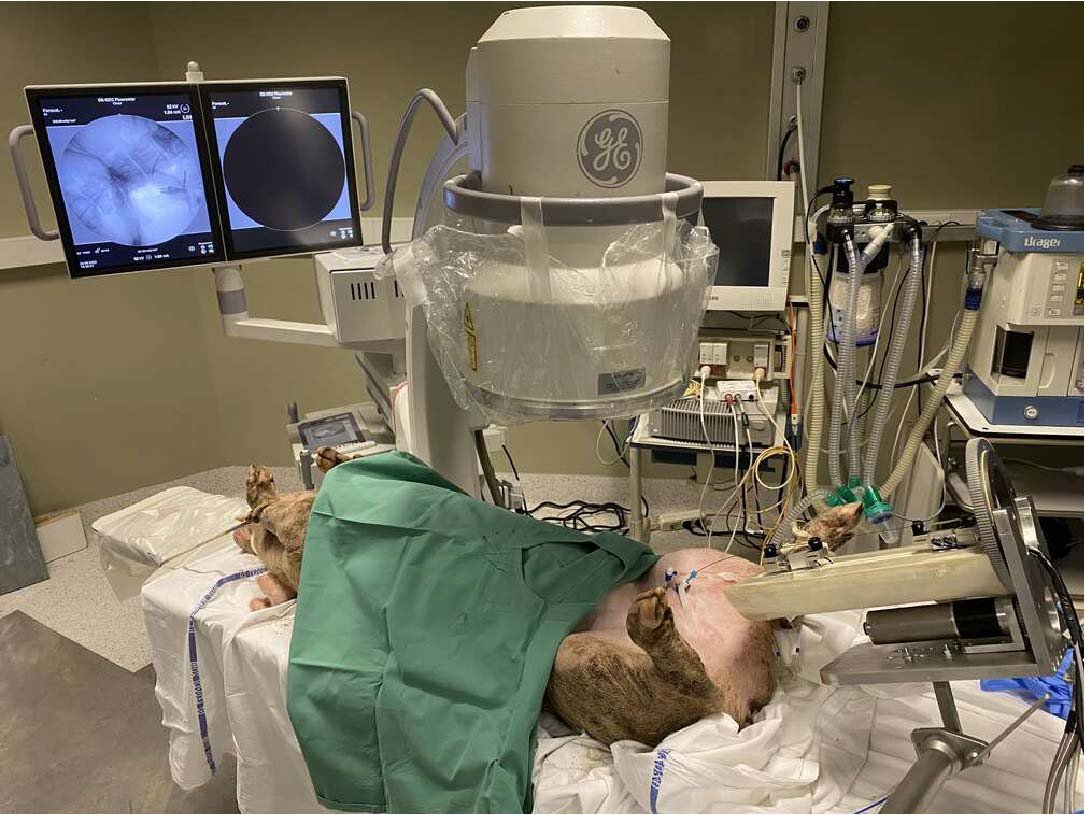
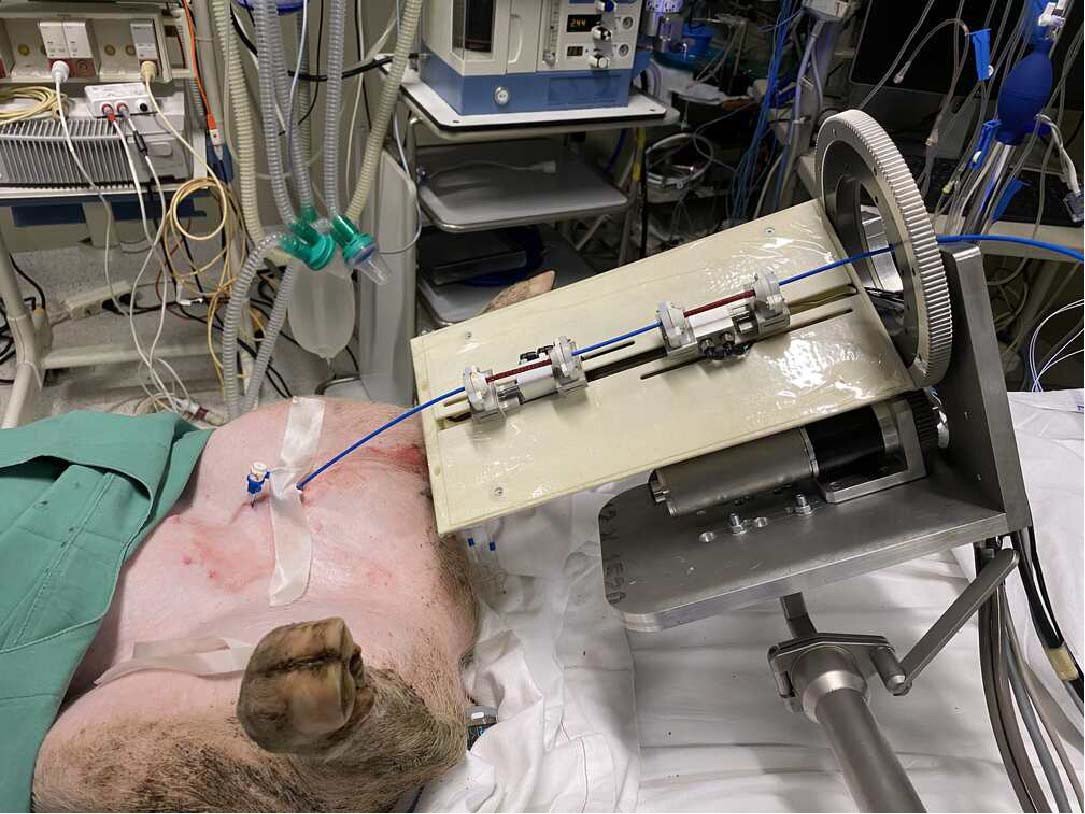
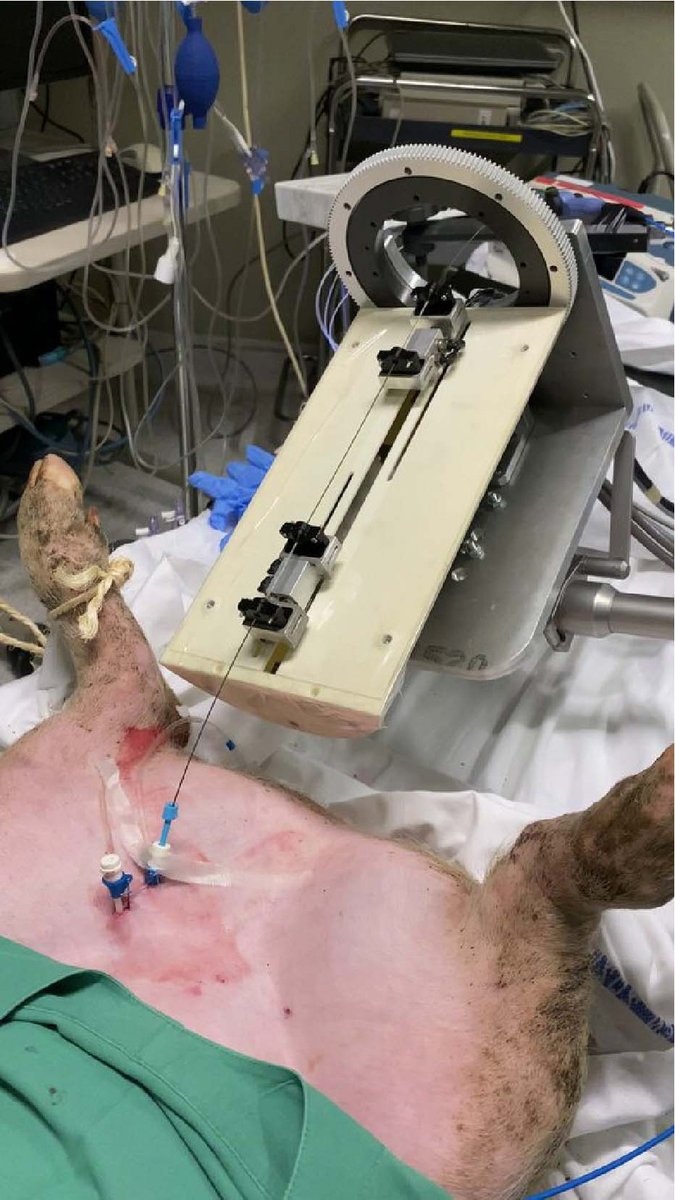
- bench force-control comparison (3 controllers, 3 runs each); feasibility in one live 40 kg swine (femoral incision)
- Key numbers
- design targets: 40 mm/s, grip force >= 4.5 N, grip torque >= 15 N.mm; contact-force error with best controller 0.0020+-0.0119 N (12.7% of 0.2 N setpoint); the 2023 stroke is unlimited
Mechanism
- Push (translation)
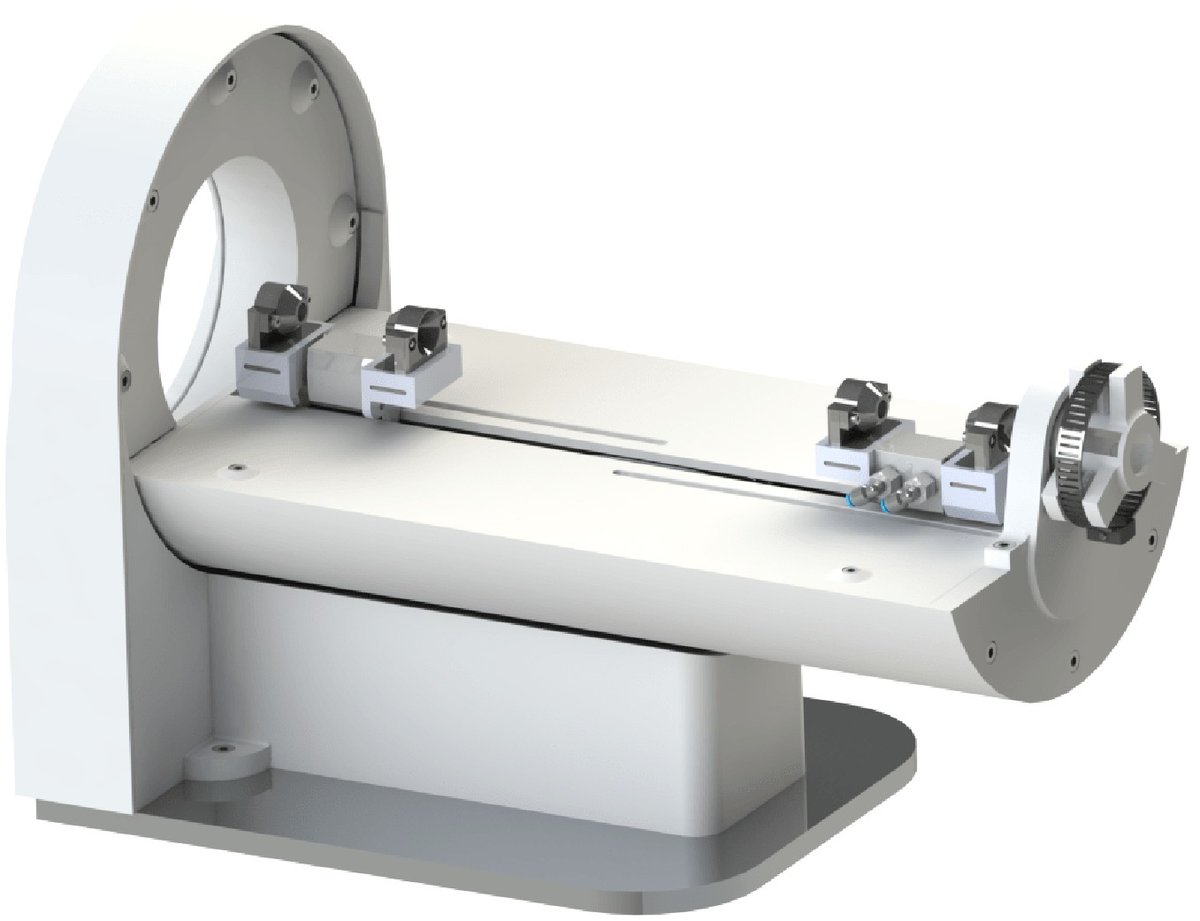
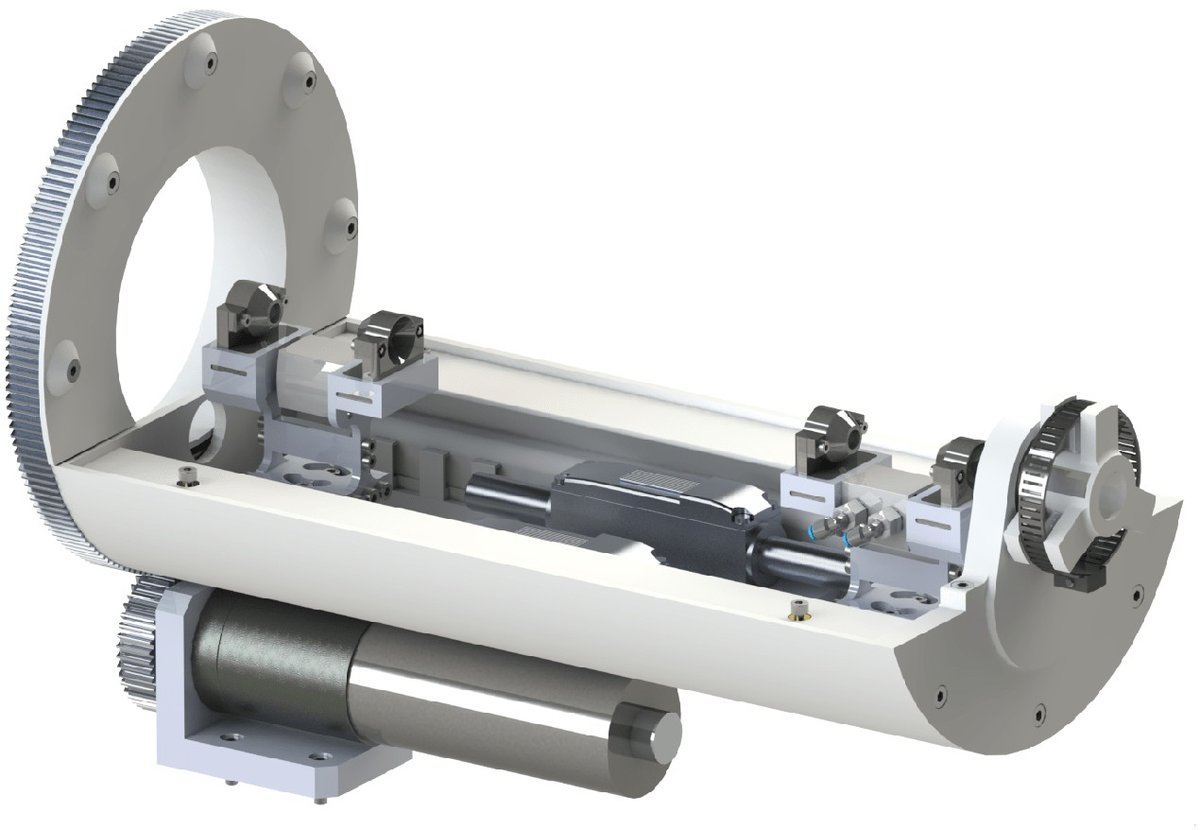
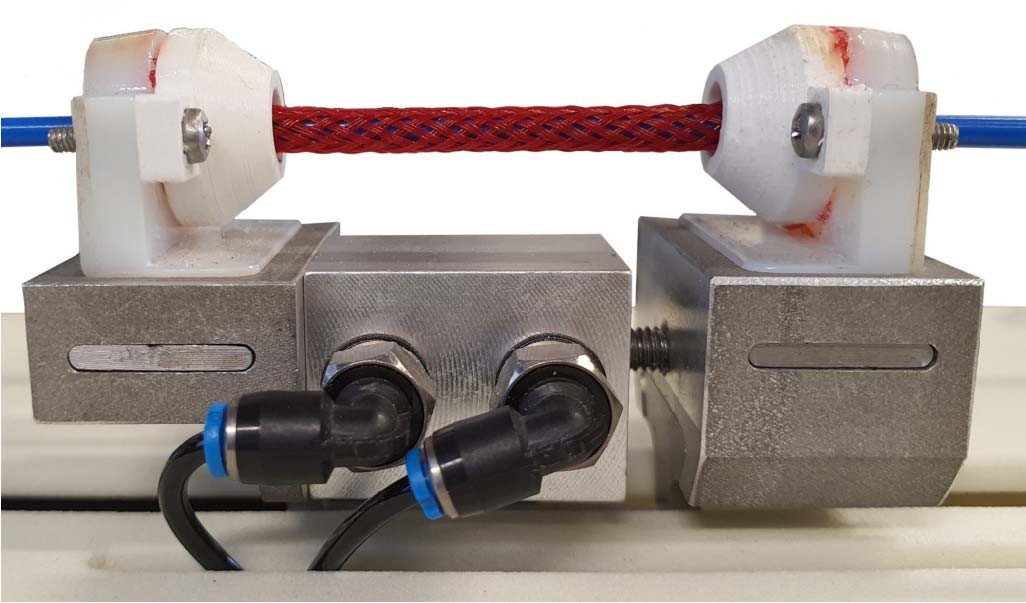
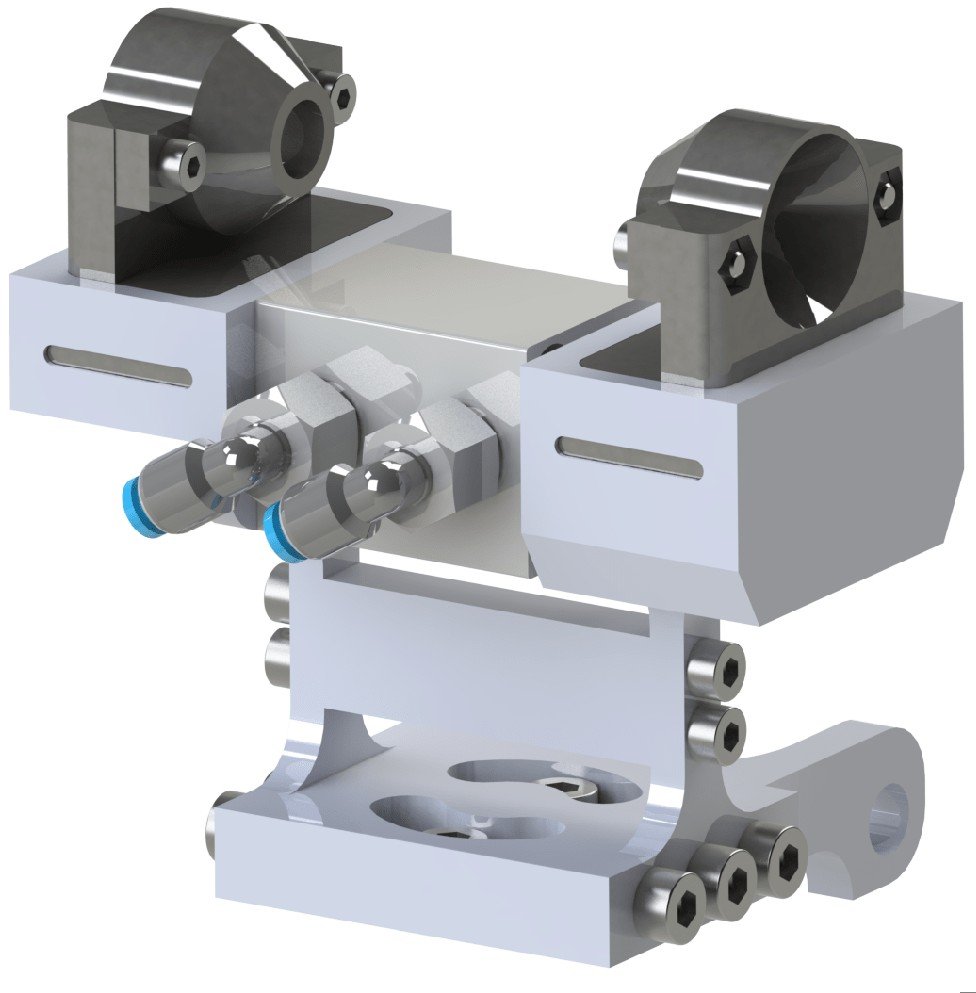
- clamp-relay (pair of pneumatic braided-sleeve grippers on two linear DC servomotors, dynamic regripping, infinite stroke)
- Twist (rotation)
- spur-gear ring turning the whole frame about the instrument axis (maxon EC-i 40)
- Device range
- N.R. (design target: generic instruments)
- Target anatomy
- cardiac ablation (beating-heart contact force); femoral-to-heart route in swine
Sensing and interface
- Force sensing
- multi-core FBG fibre in the catheter (pose and tip contact force); Hall sensors on the drive
- Leader and haptics
- none; joystick
- Imaging
- monoplane fluoroscopy; MRI N.R.
- Sterility
- N.R.
Size
- Footprint (mm)
- 330 x 178 x 194
- Mass (kg)
- N.R.
Simulation
- Simulation model
- none found
- Sim-trained controller
- none found
Versions
- Lineage
- 2023 (single); 2015: KU Leuven teleoperated active catheter for TAVI: 2-DoF catheter driver (two DC motors: roller insertion, hollow-shaft rotation) plus pneumatic-artificial-muscle distal bending, 4-DoF haptic leader, three joystick mappings compared in an artificial aorta model (Rosa 2015 IROS) (Belikov 2024 Fig. 6 RO; Zhao 2022 Table 1 row 22) (rosa2015_intuitive; belikov2024_evolution; zhao2022_remote)
Sources
- Force Control With a Novel Robotic Catheterization System Based on Braided Sleeve Grippers · IEEE Transactions on Medical Robotics and Bionics, 2023 · doi:10.1109/tmrb.2023.3291026 [alahmad2023_force]
- Intuitive teleoperation of active catheters for endovascular surgery · 2015 IEEE/RSJ International Conference on Intelligent Robots and Systems (IROS), 2015 · doi:10.1109/iros.2015.7353734 [rosa2015_intuitive]
- Evolution and current state of robotic catheters for endovascular surgery: A comprehensive review · Engineering Science and Technology, an International Journal, 2024 · doi:10.1016/j.jestch.2024.101789 [belikov2024_evolution]
- Remote vascular interventional surgery robotics: a literature review · Quantitative Imaging in Medicine and Surgery, 2022 · doi:10.21037/qims-21-792 [zhao2022_remote]
Notes
- Notes
- Limitation stated: large distance from the distal gripper to the sheath insertion point.
This record
- Read level
- full
- Picture
- alahmad2023_force Fig. 3(C), left photo (gripping-force bench; embedded 1145x1204) ↗ — licence: publisher copyright (IEEE); grade B
- Picture changes
- native extract (figure labels are a separate vector layer, embedded photos are clean); cropped; no erasing; not upscaled (a Real-ESRGAN x2 version was discarded after the no-upscale rule)
- Found by
- academic: Search of academic bedside robots.
- Data
- JSON · YAML:
records/robots/leuven_alahmad2023.yaml - Correction
- Suggest a correction [repository not created yet]